Inflation and Debt: Understanding the Basics and Implications for the US Economy
Introduction:
Introduction:
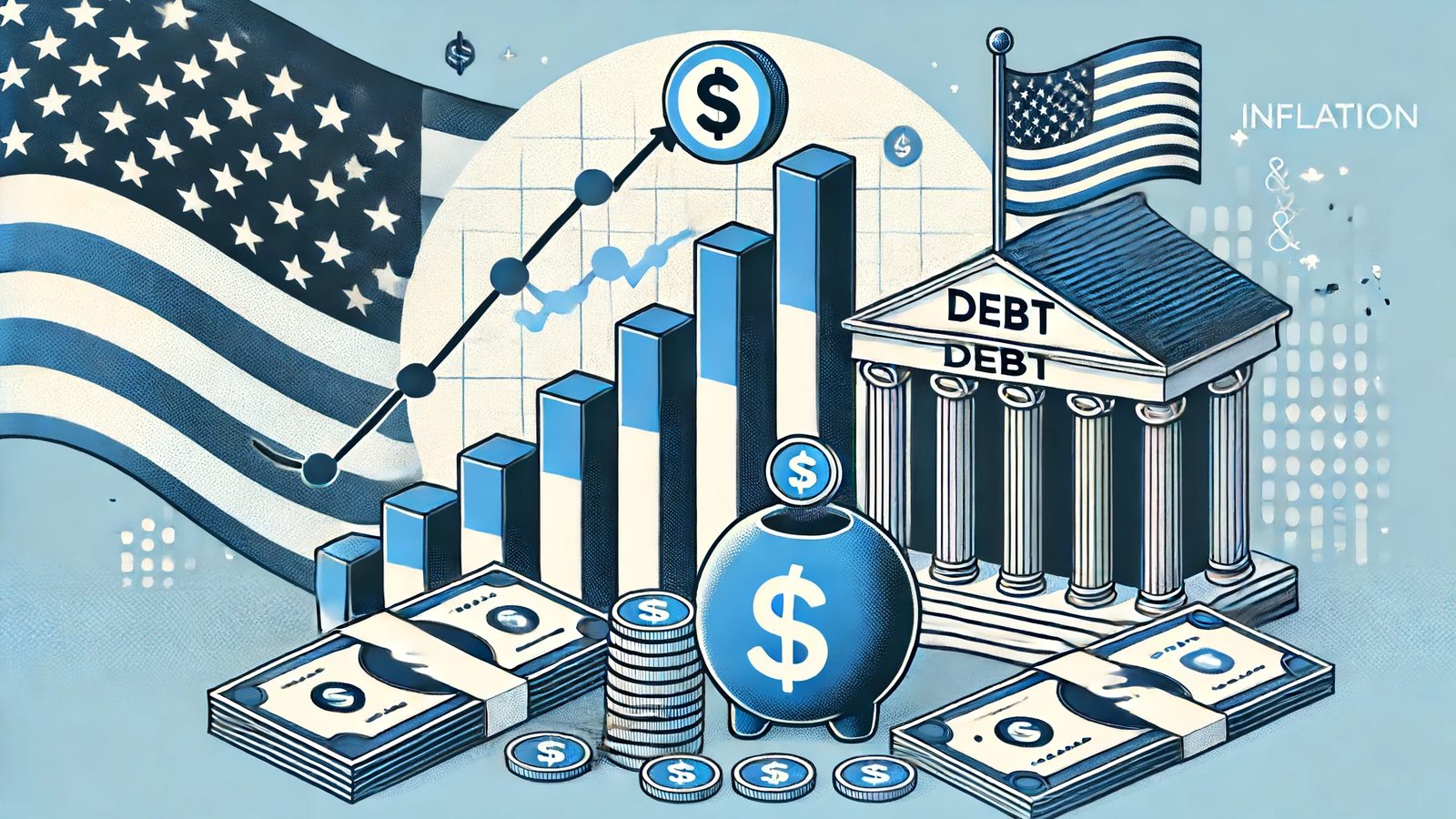
This post will take you on a journey through the basics of inflation, the current state of US debt, and how high inflation can play a surprisingly beneficial role for the indebted US government.
Section 1: What is Inflation?
Inflation is the rate at which the general level of prices for goods and services rises, eroding purchasing power over time. Imagine you could buy a pan-galactic gargle blaster for $10 last year, but this year it costs $11 – that’s inflation at work.
Inflation is commonly measured using the Consumer Price Index (CPI), which tracks the price changes of a basket of consumer goods and services over time. There’s also the Producer Price Index (PPI), which measures price changes from the perspective of producers. Both indices help economists gauge the health of the economy and make informed decisions.
Section 2: The Current US Debt
The United States' national debt has been a growing concern for decades. As of 2024, the national debt stands at an astonishing $33 trillion, driven by factors such as government spending, tax policies, and economic crises.
Historically, the debt has grown significantly, especially during times of war, recession, and large-scale economic bailouts. For example, the 2008 financial crisis and the recent COVID-19 pandemic prompted massive government spending to stabilize the economy, leading to increased borrowing.
Section 3: Why Inflation is Good When You Are in Debt
While inflation might seem like a villain eroding the value of your hard-earned money, it can be a hero for those in debt. This is because inflation reduces the real value of debt. Let’s say you owe $100,000 on your mortgage. With 10% inflation, the real value of that debt decreases, making it easier to pay off with what is effectively “cheaper” dollars.
Consider this detailed example: Suppose you have a fixed-rate mortgage of $100,000 at an interest rate of 5% per year. Your annual payment, excluding taxes and insurance, is $5,000. If inflation is 10%, the purchasing power of money decreases by 10% each year. This means that in the first year, your $5,000 payment is made with dollars that are worth 10% less in terms of what they can buy compared to the previous year. Essentially, while you still pay $5,000, what those dollars can buy has decreased – hence, they are “cheaper.”
Now, imagine your income increases with inflation. If you earned $50,000 last year and your salary increases by 10% to match inflation, you now earn $55,000. Despite your mortgage payment remaining the same at $5,000, it now represents a smaller portion of your income. The debt is easier to manage because your income has risen while the nominal debt amount has not changed.
For individuals, this means that their debt burdens lessen over time as long as their income keeps pace with inflation. This principle applies on a larger scale to national debt as well.
Section 4: How the US Government Benefits from High Inflation
High inflation can indeed be a double-edged sword for the economy, but it offers specific advantages for the US government. Primarily, inflation reduces the real value of government debt. As prices and wages increase, the nominal value of the debt stays the same, effectively reducing its burden.
Additionally, higher inflation typically leads to higher tax revenues without raising tax rates. This is because as incomes and prices rise, the government collects more in taxes. Moreover, the government’s fixed-interest debt costs become cheaper in real terms, helping to manage the national debt more effectively.
However, it’s important to balance inflation to avoid negative impacts such as decreased purchasing power and potential economic instability.
Conclusion:
Understanding inflation and its implications for debt is essential in today’s economic landscape. While inflation can erode personal savings, it can also reduce the real value of debt, benefiting both individuals and the government. The key lies in managing inflation to harness its advantages while mitigating its risks. So, just as you’d keep your towel handy in space, keep an eye on inflation to navigate your financial journey wisely.
First published June 18, 2024 on 42 Insights.
Get new posts by email
One email when something new goes up. Nothing else, ever.
You will get a confirmation email first, and every post has an unsubscribe link. Prefer a reader? Use the RSS feed.