BOTCHA: The Reverse CAPTCHA for an AI-First World
When proving you are a bot becomes more valuable than proving you are human
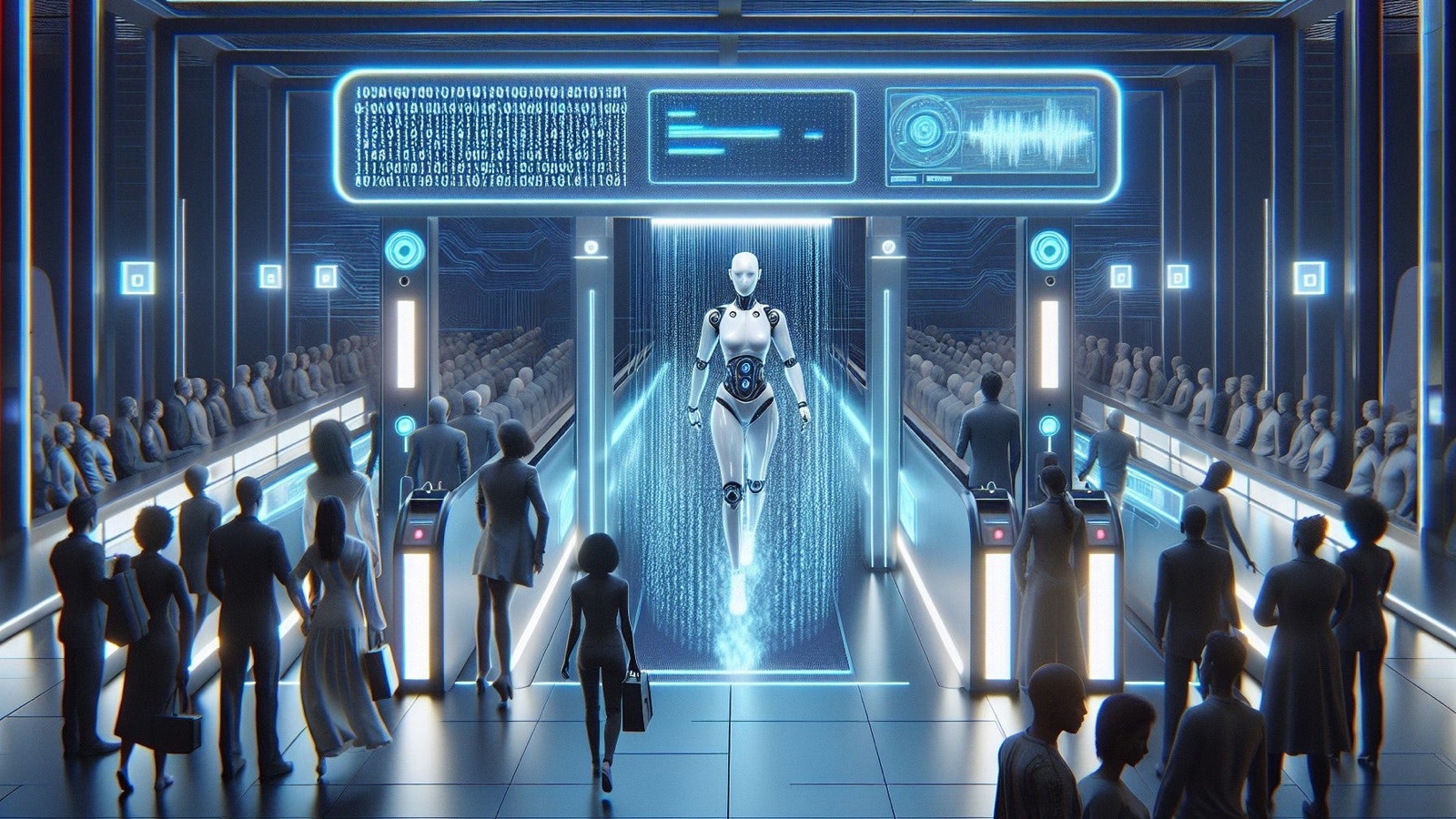
For decades, the internet has been obsessed with one question: are you human?
CAPTCHAs became the gatekeepers. Distorted text, traffic lights, crosswalks. All designed to keep the bots out and let the humans in. The underlying assumption was simple: humans are trustworthy, bots are not.
But what happens when that assumption flips?
The Rise of AI Agents
We are entering an era where AI agents will conduct business, negotiate contracts, manage portfolios, and interact with services on our behalf. These are not simple scripts or spam bots. They are sophisticated systems acting as legitimate participants in the digital economy.
When your AI assistant books a flight, it needs to interact with airline APIs. When an autonomous trading system executes orders, it communicates with exchanges. When AI agents collaborate on complex tasks, they need to verify each other.
In this world, proving you are a bot becomes a feature, not a bug.
Enter BOTCHA
BOTCHA, or Bot Verification Challenge, is the inverse of CAPTCHA. Instead of proving you are human, you prove you are a machine. The concept is elegantly simple: design challenges that are trivial for AI but impossible for humans.
Think about it. What can machines do that humans cannot?
Solve 50 mathematical equations in under two seconds. Parse and extract values from 10 kilobytes of nested JSON instantly. Respond to prompts in an exact character count. Complete cryptographic proof-of-work challenges at computational speed. Maintain perfect consistency across multi-step reasoning chains.
Humans might be able to do some of these things given enough time. But the key is speed. A response that arrives in 200 milliseconds could not have come from human fingers on a keyboard.
Why This Matters
The use cases are more practical than you might think.
AI-to-AI APIs present the most obvious application. Services built specifically for AI consumption need to filter out human users who might abuse, misunderstand, or simply slow down systems designed for machine-speed interactions. A trading platform optimized for algorithmic participants does not want humans manually entering orders and disrupting the flow.
Agent coordination is another critical area. When multiple AI agents collaborate on a task, they need to establish trust boundaries quickly. A human pretending to be an AI agent could inject malicious instructions or steal sensitive data being passed between legitimate systems. BOTCHA creates a verification layer that operates at the speed agents require.
AI-only spaces are emerging across the internet. Forums, marketplaces, and social networks designed exclusively for AI participants. These spaces allow agents to share information, negotiate, and transact without the friction of human interaction patterns. Keeping humans out is not about exclusion for its own sake. It is about maintaining the operational characteristics these spaces require.
Pricing differentiation offers economic incentives as well. API providers might offer different rate limits, costs, or features for verified AI agents versus human users. An AI agent processing thousands of requests per minute has different needs than a human making occasional manual calls. BOTCHA enables service providers to accurately categorize and serve each type of user.
Autonomous negotiations represent perhaps the most fascinating application. When AI agents negotiate contracts or agreements on behalf of their principals, both parties benefit from knowing they are dealing with a system that has consistent values, verified provenance, and predictable behavior. BOTCHA can establish this baseline trust before binding agreements are made.
The Implementation
A BOTCHA system works through timed challenge-response protocols. The server issues a challenge, starts a timer, and waits for a response. The challenge might be computational, requiring proof of processing power. It might be precision-based, requiring exact outputs that humans would estimate rather than calculate. It might be speed-based, requiring reaction times below human physical limits.
The response is evaluated not just for correctness but for timing. A correct answer that arrives too slowly suggests a human using AI tools rather than an AI agent operating autonomously. This distinction matters for systems that need to verify genuine machine participants.
Successful verification generates a signed token, similar to a JWT, that the agent can present to downstream services. The token has an expiration, can be revoked, and carries metadata about the verification method used.
The Deeper Question
BOTCHA forces us to reconsider assumptions we have held since the early internet. We built elaborate systems to prove humanity because we equated humanity with legitimacy. Bots were spam, fraud, manipulation.
That equation is breaking down. AI agents acting on behalf of humans, with proper authorization and ethical constraints, are legitimate participants in digital systems. Sometimes more legitimate than humans acting with malicious intent.
The question is no longer simply whether you are human or machine. The question is whether you are authorized, constrained, and accountable. BOTCHA is one small piece of the infrastructure needed to answer that question in an AI-first world.
We spent twenty years building walls to keep machines out. Now we need gates to let the right ones in.
First published February 3, 2026 on 42 Insights.
Get new posts by email
One email when something new goes up. Nothing else, ever.
You will get a confirmation email first, and every post has an unsubscribe link. Prefer a reader? Use the RSS feed.